Loft access is something most homeowners use without a second thought—until something goes wrong. A poorly chosen or aging ladder puts users at genuine risk. Knowing which safety features matter most can mean the difference between a secure install and a costly accident.
According to the Royal Society for the Prevention of Accidents (RoSPA), ladders and stepladders are involved in approximately 40 fatalities and over 67,000 injuries annually across the UK. Many of these incidents involve domestic access points, including attic ladders that were either under-specified or improperly maintained.
When evaluating any residential loft ladder, these are the safety features that should be non-negotiable.
Why Does EN 14975 Certification Matter?
EN 14975 is the European standard specifically developed for loft ladders. It governs:
Minimum step dimensions
Load-bearing capacity thresholds
Railing and handrail requirements
Deployment and folding mechanism reliability
Any ladder you consider purchasing should display this certification. It signals that the product has been independently tested and meets established minimum safety benchmarks. Products lacking this certification offer no verifiable guarantee of structural performance.
What Handrail Standards Should You Expect?
Handrails are critical—particularly on descents when visibility is limited or hands are occupied. Industry guidance recommends:
Dual handrails on both sides of the ladder for balanced support
A graspable diameter of 30–45 mm for secure hand placement
Rails that extend beyond the top step to assist the transition from ladder to hatch
Single-side rails are increasingly considered insufficient for ladders used by multiple household members, particularly older adults or those with mobility considerations.
How Important Are Anti-Slip Steps?
Step surface texture directly affects grip under real-world conditions—socks, dust, and angled footing all reduce traction on smooth surfaces. Look for:
Grooved aluminium treads with raised ridges
Non-slip rubber inserts bonded to timber steps
Minimum step depth of 60 mm to allow secure foot placement
Steps that are too narrow or too smooth are a consistent factor in fall-related incidents. This feature is worth examining closely in product specifications.
Do Loft Ladder Springs and Hinges Affect Safety?
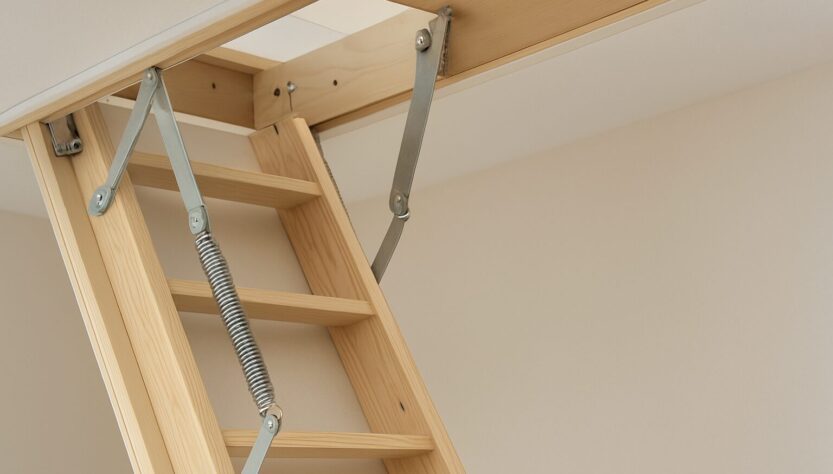
Absolutely. Deployment mechanisms bear repeated stress over the ladder’s lifespan. Cheap springs lose tension quickly, causing the ladder to drop unexpectedly or resist smooth closure. Quality indicators include:
Gas-assisted springs that control descent speed
Heavy-duty piano hinges for consistent fold alignment
Positive locking mechanisms that prevent unintended folding during use
A ladder that wobbles at the hinge point or requires force to open is already a safety concern. Smooth, controlled operation is the benchmark.
What Role Does Maximum Load Rating Play?
The load rating isn’t just about the user’s body weight—it accounts for the combined weight of tools, boxes, and awkward carrying positions. Key thresholds:
Application
Recommended Load Rating
Light residential use
150 kg
Moderate storage access
175 kg
Heavy or frequent use
200 kg+
Exceeding a ladder’s rated capacity—even temporarily—accelerates structural fatigue and increases failure risk significantly.
Is the Hatch Frame Part of the Safety Equation?
Yes. A structurally sound ladder attached to a weak or undersized hatch frame offers compromised protection. Before installation:
Inspect existing joists for rot, cracks, or inadequate depth
Confirm that the hatch opening dimensions match the ladder model’s specifications
Reinforce the frame if necessary using appropriate timber noggins
The ladder and hatch work as a system. Upgrading one without assessing the other leaves a gap in overall safety performance.
Prioritising Safety Pays Off Long-Term
Investing in a certified, well-featured loft ladder protects everyone who uses it. Focus on EN 14975 compliance, reliable handrails, anti-slip surfaces, and a load rating that accounts for real usage patterns. A product that meets these standards will deliver years of secure, consistent performance.